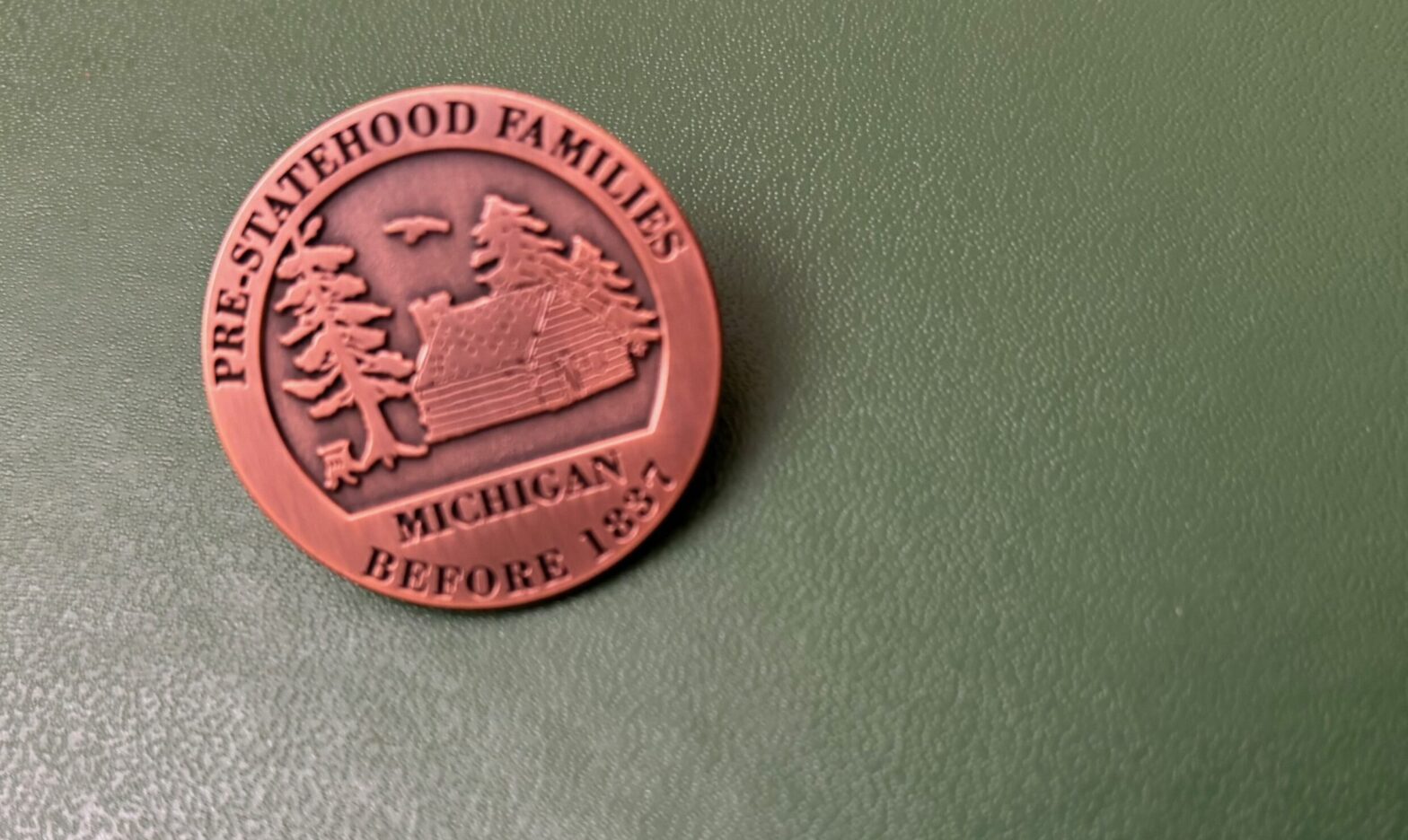
I recently received a Pioneer Certificate through the Michigan Genealogical Council. The program recognizes persons who can prove descent from an individual who settled in Michigan prior to statehood on 26 January 1837. The MGC has a separate First Families Certificate that recognizes descent from persons who settled in Michigan between 26 January 1837 and 31 December 1880.
The process of proving a pioneer ancestor has a lot in common with a lineage society application or making the case for citizenship by descent. Make a plan to connect each generation: birth, marriage, death and otherwise. Follow the record trail carefully. Use the document in hand to make the connection to the next document. Repeat until you prove your case.
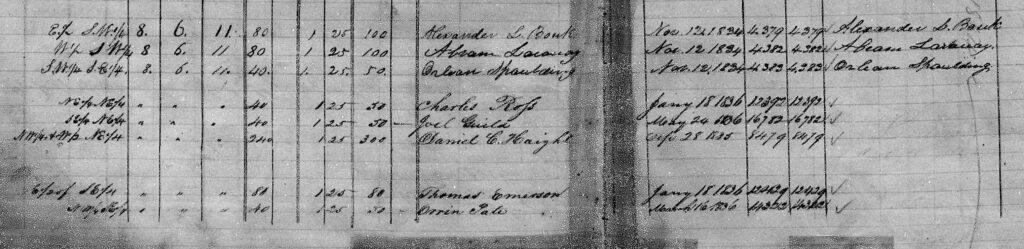
I connected myself by descent to a Michigan pioneer named Orleans Spaulding. Records put him in Wayne County as early as 1831. He filed for a Kent County land patent in late 1834 (he’s the second entry on the excerpted image below), paying $50 for 40 acres. He received the patent 1 July 1836.
He and second wife Rilla Ann settled in Paris Township, Kent County, not long after. Their daughter, Mary Jane, was born 1 April 1838. She is my fourth great-grandmother (which makes Orleans and Rilla Ann my fifth great-grandparents).
Evidence to make these connections included:
- Baptism registers
- Birth returns
- Newspapers obits and birth announcements
- Birth certificates
- Death certificates
- Census records
- Authored sources
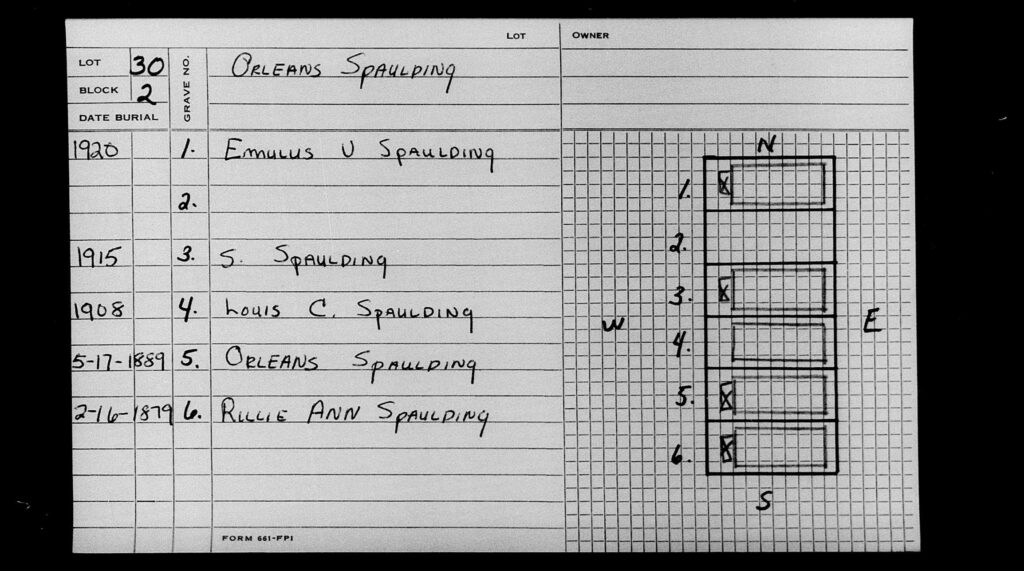
- Cemetery records and grave transcriptions
- Deeds
- Land patents
I crafted a 36-page report with a narrative about Orleans, including charts, copies of documents and citations. The report proves I’m an eighth-generation Michigander.
So, Who is Orleans Spaulding?
Kent County pioneer Orleans Spaulding led an interesting and eventful life. He was born in New York, probably on 31 July 1804, but by the mid-1830s he settled in Paris Township, Kent County. In the summer of 1837, Orleans was stricken with a condition that caused blindness, which lasted about 6 years (3 with total blindness and being “unfitted for labor”). Another local pioneer, George C. Evans, repeatedly assisted him during this period, extending provisions and credit until Spaulding was later able to repay the debt. The family scrimped by with what wild game they could hunt and what they could grow as they cleared more of the land of their small farm.
Orleans and Rilla Ann had three children during this period, the first of which was Mary Jane, b. 1 April 1838. She was followed by DeWitt, b. 6 July 1840; and Miner, b. around 1843.
Through the 1840s and 1850s, Orleans and Rilla Ann had four more children: Charles, b. 2 February 1845; Ransom, b. 24 March 1848; Lewis, b. 4 March 1850 and Helen, b. around 11 October 1854. In all, Orleans Spaulding fathered 10 known children, three with first wife Sally Van Dyke, who died in Michigan after Orleans filed for his land patent and before he received it, and seven with second wife Rilla Ann who settled with him in Kent County.
Rilla Ann died 16 February 1879. Orleans Spaulding died 12 May 1889 in Paris Township, Kent County, Michigan, a place he had called home for more than 50 years. He and his wife Rilla Ann were buried there in Oak Grove Cemetery.
Proving Descent for Lineage Society or Citizenship Applications
Proving descent is similar, regardless of context. The biggest variable is document availability. Yes, the document may be scanned and online, but is it still available from the original issuing authority? How much trouble and wait do you have to go through to get those certified copies?
Citizenship applications often have a very high bar, asking for certified documents from the issuing authorities (and asking for an explanation if the applicant cannot provide them). Certified documents can take weeks to months to receive. Lineage societies like the Daughters of the American Revolution can be a bit more forgiving, knowing that they often deal with cases that stretch far enough back to strain the documentary evidence. Both benefit from the type of organized and analytical approach that experienced genealogists offer.
If you have questions about putting together a lineage proof for a society application or citizenship, tap or click the Book a Call button. I offer free, 15-minute consultations. Whether you just need a professional assist with those difficult-to-connect generations, or want a more in-depth research partner, I can help.